
School-level AI rules
Lithuania's Ministry of Education describes school guidance that keeps teachers responsible for curriculum, assessment, privacy, disclosure, and deciding when AI adds educational value.
Read the Ministry contextRESEARCH & METHODS
Santaros Labs is for people who learn, teach, and study learning, as well as principal investigators and research group leads responsible for this work. We conduct analysis and research-methods work on how AI systems affect scientific practice while preserving rigor, traceability, privacy, learner agency, and human accountability.

OUR MISSION
We work with people who learn and teach, as well as people who analyze learning and build research methods. Our planned empirical studies will test whether AI-assisted instruction changes scientific reasoning, literature review, coding, analysis, and research-team learning. Their evaluation plans separate short-term productivity from accuracy, evidential support, calibration, independent transfer, and error detection.
Completed source syntheses report their scope and limits. Protocols in development and preregistration are never presented as completed intervention evidence.
SCIENTIST PROGRAM FIT
Anthropic's published scientist program is intended for principal investigators or equivalent leads at accredited universities and nonprofit research institutes in the natural sciences, mathematics, computer science, engineering, and related fields. Santaros Labs presents this as a useful workflow reference for research teams, not as an approval or eligibility determination.
Keep protocols, files, and research context together for the group.
Use Claude's scientific, coding, and collaborative workflows where they fit the study.
Connect to scientific databases and approved research tools while preserving provenance.
Coordinate SSO, central billing, and administration for a shared workspace.
The published program supports a minimum one-seat setup for an eligible research lead.
To apply, confirm your current institutional affiliation and briefly describe your research. Anthropic says most applications are reviewed within 5 to 7 business days. For-profit and industry teams should use the standard Team or Enterprise plans. Final eligibility and approval decisions rest with Anthropic.
Read Anthropic's current scientist-plan criteriaLITHUANIA CONTEXT
Our Lithuania-facing work uses public Lithuanian education guidance and local language, access, and classroom conditions to ask better questions about teaching, assessment, and responsible AI use.
Lithuania's Ministry of Education describes school guidance that keeps teachers responsible for curriculum, assessment, privacy, disclosure, and deciding when AI adds educational value.
Read the Ministry contextThe National Agency for Education's EdTech Centre provides context for digital competence development, inclusive innovation, and the DigCompEdu framework used in teacher learning.
Read the EdTech contextAny Lithuania-focused analysis should test Lithuanian-language source support, multilingual access, disability access, device and connectivity constraints, and the difference between language assistance and learning.
Open the planned Lithuania case fileANALYSIS FRAME
Bilingual review, translation checks, and source-level scoring before comparing outcomes.
Urban, regional, and rural conditions documented without turning schools or teachers into a public ranking.
Decisions about educational value, privacy, disclosure, and when not to use AI measured separately from tool adoption.
Independent reasoning, source checking, uncertainty, and critical revision assessed after assistance ends.
School rules, consent, data minimization, access controls, workload, and escalation routes recorded before observation.
How AI-assisted teaching changes hypothesis generation, critique, calibration, transfer, and scientific judgment.
How learners can preserve the chain from source data and literature to transformations, code, results, and claims.
How learners use AI to evaluate citations, disagreement, uncertainty, missing data, and limits of the evidence.
How shared AI workspaces affect feedback, learning, handoffs, review, expertise, and accountability in scientific groups.
PILLAR 01
Measure what learners can explain, revise, and transfer independently.
Our planned studies examine AI-assisted teaching across question formation, hypothesis critique, experimental design, simulation, code generation, statistical interpretation, and scientific argument.
Comparisons separate temporary task support from learning. Better instruction should improve testability, evidence alignment, calibration, error detection, and performance on new problems without the original scaffold.

PILLAR 02
Teach learners to make the path from raw evidence to claim inspectable.

AI-assisted coursework and research can involve transformations that disappear from the final submission: retrieved sources, data cleaning, generated code, model choices, rejected analyses, and rewritten interpretations.
We are developing teaching methods that make provenance part of the analysis itself, with planned evaluation of whether an independent learner can reproduce the work.
PILLAR 03
Teach learners to test whether a claim is supported, not merely well written.
Scientific synthesis can become unreliable when fluent summaries flatten disagreement, attribute unsupported claims to sources, or hide uncertainty. We design instruction around contradiction detection, source discrimination, evidence certainty, and calibrated refusal.
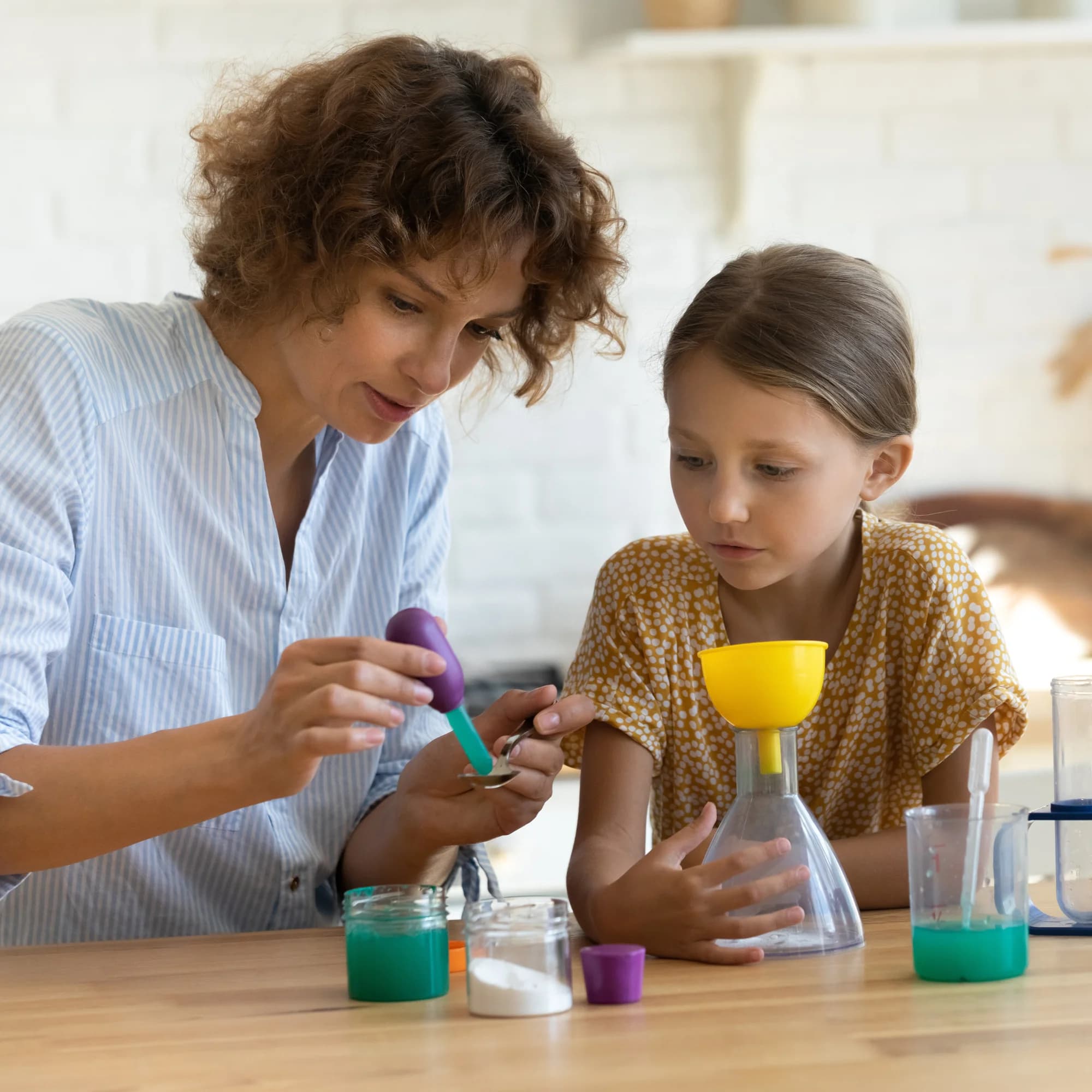
Planned evaluation combines citation-level checks, expert scoring, confidence calibration, delayed transfer, and structured error taxonomies. The analysis will measure learner reasoning separately from the fluency of AI-assisted text.
PILLAR 04
Study the lab as both a research system and a learning environment.
Research is collaborative and instructional. Our planned work examines how AI changes feedback, review burden, mentoring, handoffs, authorship, responsibility, and opportunities to build expertise across research teams.
The aim is to design shared practices that make reasoning visible, preserve productive disagreement, and help mentors support learning without turning supervision into surveillance.

Planned studies will test whether transparent assistance supports early-career learning and whether opaque delegation reduces opportunities to build research judgment.
Each study pairs scientific ambition with explicit controls for validity, ethics, security, and reproducibility.
Specify questions, measures, exclusions, and analysis decisions before outcomes are known whenever the design permits.
Evaluation criteria come from the science being studied, not from generic impressions of output quality.
Use data minimization, access controls, and study-specific security practices appropriate to the sensitivity of the work.
Record sources, transformations, code, model context, and material human decisions across the workflow.
Separate exploratory discovery from confirmatory analysis and include independent reproduction where feasible.
Publish boundaries, null results, and failure modes so future teams know where evidence does and does not apply.
RESEARCH STANDARDS
Our standards distinguish exploratory from confirmatory work, define outcome status, document model and tool configurations, and require limitations and corrections to remain visible.
Read the research standardsRESEARCH COLLABORATION
Bring a research question, an evaluation problem, or a reproducibility challenge. We will start with study design, not marketing claims.
Proposed collaborations proceed only after scope, governance, ethics, and data terms are clear.